Bowhunting Equipment Checks That Matter Before Opening Day
At the trailhead, a broadside animal can turn a calm plan into a rushed decision. A frayed serving, loose sight housing or unfamiliar shooting angle may not reveal itself until the moment matters, when there is no sensible time to troubleshoot. A good pre-season routine is less about polishing equipment than proving that your setup, judgment and practice habits agree with one another. The aim is simple: know what works, know what does not, and leave any shot that asks for more certainty than you can provide.
Start with the rules, not the release aid
Before inspecting gear, confirm that the hunt itself is lawful. Regulations can define permitted seasons, species, licenses, tagging procedures, legal shooting hours, equipment restrictions and the use of elevated stands or other access methods. They may differ between jurisdictions, and requirements can change, so use current guidance from the relevant wildlife agency rather than relying on a previous season's notes or a friend's summary.
Read the sections that affect your actual plan. A bow that is acceptable in one place may not meet another area's requirements, and a legal hunting method does not automatically make every shot ethical. Check land access as well: permission, public-land conditions, boundaries and local fire or access closures can all alter where you may set up.
Keep the applicable regulations accessible on your phone and carry any required documents as directed. This is not paperwork separate from preparation. Knowing the rules helps you decide where to practice, what equipment to bring and when to pass on an opportunity.
Inspect the parts that carry the load
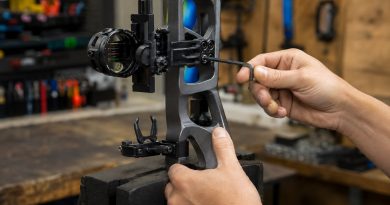
A useful bowhunting gear inspection begins with the components that can fail under tension. Look closely at the string and cables for broken or fuzzy strands, unusual wear, separation, serving movement or signs of contact with a cam, rail or other edge. Examine cams, axles, modules, limbs and limb pockets for cracks, dents, distortion or anything that has changed since the last session.
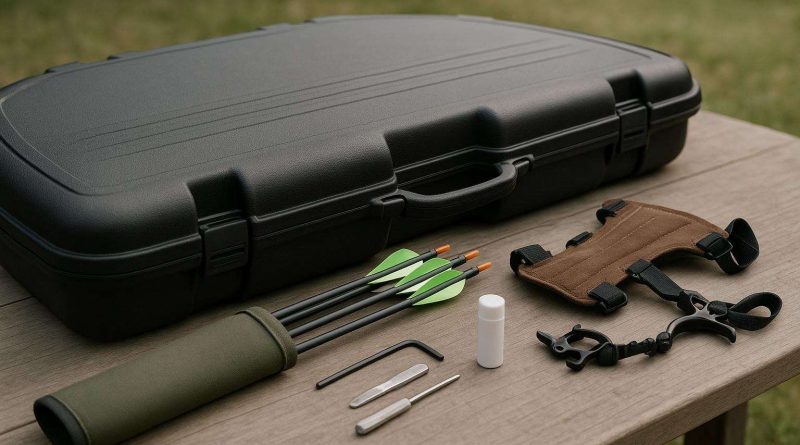
Check that fasteners are secure without treating excessive force as a solution. Sight pins, rests, stabilizers, quivers and other attachments should remain firm when the bow is handled normally. Inspect arrows for cracks, splits, damaged nocks, loose inserts and bent shafts. Flexing an arrow near your face or using a questionable shaft is a needless risk; set damaged equipment aside for proper evaluation or replacement.
Broadheads deserve their own check. Confirm that blades are secure, edges are protected during transport and the head matches the arrow and setup you have actually tuned. Do not assume that a new head will behave like the practice point used to sight in. Verify flight safely before hunting, and avoid improvised changes to any load-bearing or safety-critical component.
Confirm the setup after every change
A bow can feel familiar while its point of impact has moved. String replacement, a new rest, altered draw length, a different arrow, a changed peep position or even a hard knock against a stand can justify returning to basic tuning and sight confirmation.
Shoot at the distances and angles you may realistically face, but do it in a controlled practice setting. Watch for unexplained groups, erratic arrow flight, excessive noise, vane contact or a need to make increasingly large sight adjustments. Those symptoms can point to a tuning issue, damaged equipment or inconsistent form. Do not solve them by simply moving the sight until the arrows land where you want; find the cause first.
A sensible equipment check should leave you with a clear decision: use the setup as confirmed, have it inspected by a qualified technician or retire the questionable part. If a bow has been dry-fired, suffered a significant impact or developed a new sound, stop shooting until it has been assessed.
Practice for decisions, not just the target
Archery practice becomes more useful when it tests judgment as well as accuracy. Build sessions around a repeatable draw, a stable anchor, a controlled expansion and a clean follow-through. Then add the conditions that affect an ethical shot: uneven footing, limited lanes, partial concealment, changing light and the need to hold without rushing.
Your effective range is not the farthest distance at which an arrow occasionally reaches the center. It is the distance at which you can produce consistent, well-controlled shots under conditions that resemble the hunt. If your groups open sharply from an elevated position or after a short period of waiting at full draw, reduce the range you consider acceptable.
Practice drawing without excessive movement, but do not turn the session into a test of endurance. Fatigue changes form and decision-making. Stop while your technique remains disciplined, and record the distances, angles and conditions that exposed weaknesses. That record is more useful than a single impressive group.
Use a last-check list in the field
On the final inspection, keep the process short enough to repeat and specific enough to catch problems. One practical checklist is:
– Current regulations, license and required tags confirmed
– Bow, string, cables and fasteners inspected
– Arrows, nocks, vanes and broadheads checked
– Sight, rest and quiver secure
– Backup release or essential spare items packed when appropriate
– Setup confirmed after any recent change
– Safe, familiar shot angles and a personal range limit established
– Planned target and background suitable before drawing
The final two points are where equipment preparation becomes ethical shot decisions. Do not draw because an animal is present; draw only when the target, angle, distance, background and your own stability meet the standard you practiced. A steep quartering angle, obstructed vital area, uncertain range or movement that forces a rushed anchor is a reason to wait or pass.
If the opportunity never becomes clean, the preparation still mattered. Reliable gear cannot compensate for poor visibility, an unsafe background or a shot outside your proven ability. Opening day should begin with enough confidence to recognize both a workable opportunity and the moment when restraint is the skilled choice.